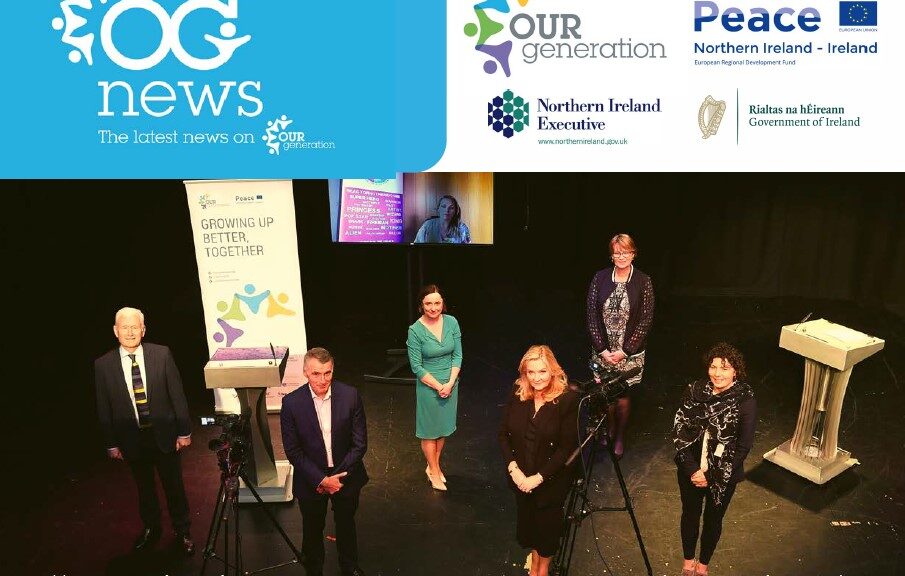
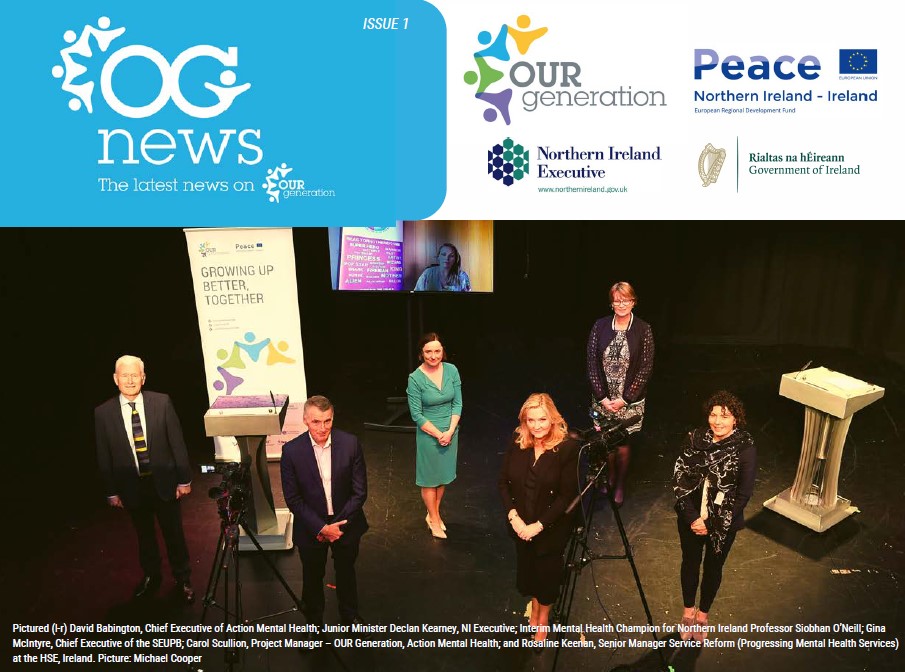
The Our Generation project provides a unique opportunity for communities, North and South of the Border, to work together to halt the intergenerational impact of trauma and to build emotional resilience and peace for generations to come.
This three-year project will run to December 2022 and engage with36,000 children, young people and their key contacts. The project will be delivered in education, youth and community settings across the 5 Urban Village Areas of Northern Ireland and the Border Region Area of Ireland.
The cross border partnership of 7 regional organisations will be led by Action Mental Health in partnership with of Donegal Youth Service, Co-Operation Ireland, Youth Action NI, Youth Work Ireland, PlayBoard NI & Ulster University
Funding for the Our Generation project has been awarded through the European Union’s PEACE IV Programme, managed by the Special EU Programmes Body (SEUPB), match-funding for the project has been provided by The Executive Office in Northern Ireland and the Department of Rural and Community Development in Ireland.
OUR Generation will collaborate with existing community–based initiatives to offer accessible, age appropriate prevention, early intervention and recovery activities delivered on a cross-border and cross-community basis to support the mental and emotional well-being of children and young people. Children and young people will engage in programme design and delivery, including provision of peer support, developing skills and confidence to improve well-being within their communities and act as agents of change, building peace for future generations.
If you can’t do something whimsical at Christmas, when can you? Especially this Christmas, which comes at a time when the world has been gripped by worries related to the pandemic.
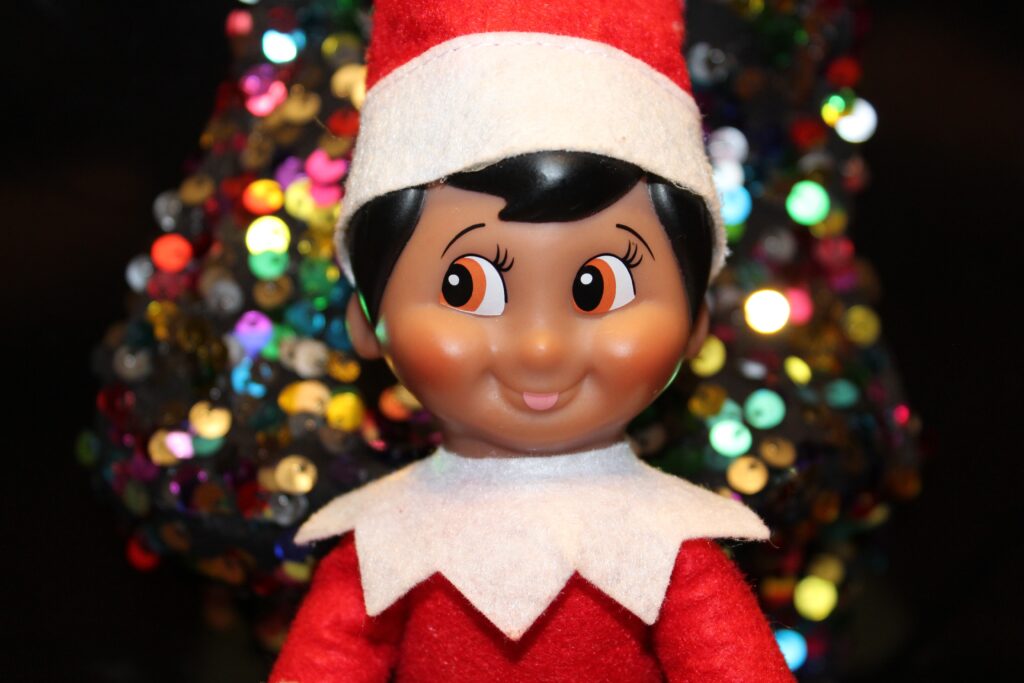
AMH’s Linsey Blair has embraced the season by getting an Elf on the Shelf, and ever since, has been enjoying “something a bit daft” with her fiancée. Naming him ‘Walshy McWalshface, the Good Mental Elf’, the little seasonal sprite gives the couple a regular, daily chuckle – and at the same time acts as a catalyst to improve their collective mental health.
“Seeing Walshy McWalshface everyday gives us a reminder that we need to do at least one thing to improve our mental health. Sometimes, it’s a walk down the pier with the dogs, as we are lucky to live by the sea, or cooking a nice meal together. It can even mean just watching something on TV together, that gives us a laugh – but it helps us to stay in a good place.
“During this semi-lockdown scenario, the elf prompts us to focus on happy things and keep us strong!” she said.
The world-renowned Mayo Clinic says that not only does laughter activate and relieve people’s stress responses and soothes tension, in the short term, it also can, in the longer term, relieve pain, improve people’s mood and even help their immune system.
Every year, AMH New Life Counselling’s Elaine Gormley buys a Christmas tree decoration or bauble that marks something important that has taken place that year. Elaine explains:
“If I was on holiday, I’d buy something that has that particular place name on it, as a lovely reminder of my trip. When we got our first dog, I bought a personalised dog decoration for her and when we moved into our house I bought a decoration depicting a house. So now, every year, when it comes that time to put up our tree, these decorations are a great way of being reminded of happy memories and events.”
Elaine also likes to hang fresh holly in the house.
“I like to hang the holly on top of picture frames, then on January 6th, when the time comes to pack all the festive decorations down for another year, we put the holly in the fireplace and take a moment to make a wish for the year ahead. It’s a gesture that is also all about letting go of any negativity from the previous year. We light the holly and all the negativity goes up the chimney and we are left with good intentions for the year ahead.”
Jamie McNulty from the AMH Our Generation Team shows us a fun way to spread some happiness to your loved ones, as this year we could all do with a little extra kindness and cheer!
Today some of our staff have been recommending their favourite Christmas Movies
Elaine Gormley, a counsellor in AMH New Life Counselling:-
I love Christmas but understand it is also a very challenging time. I have a few traditions that I do every year that really make me feel good.
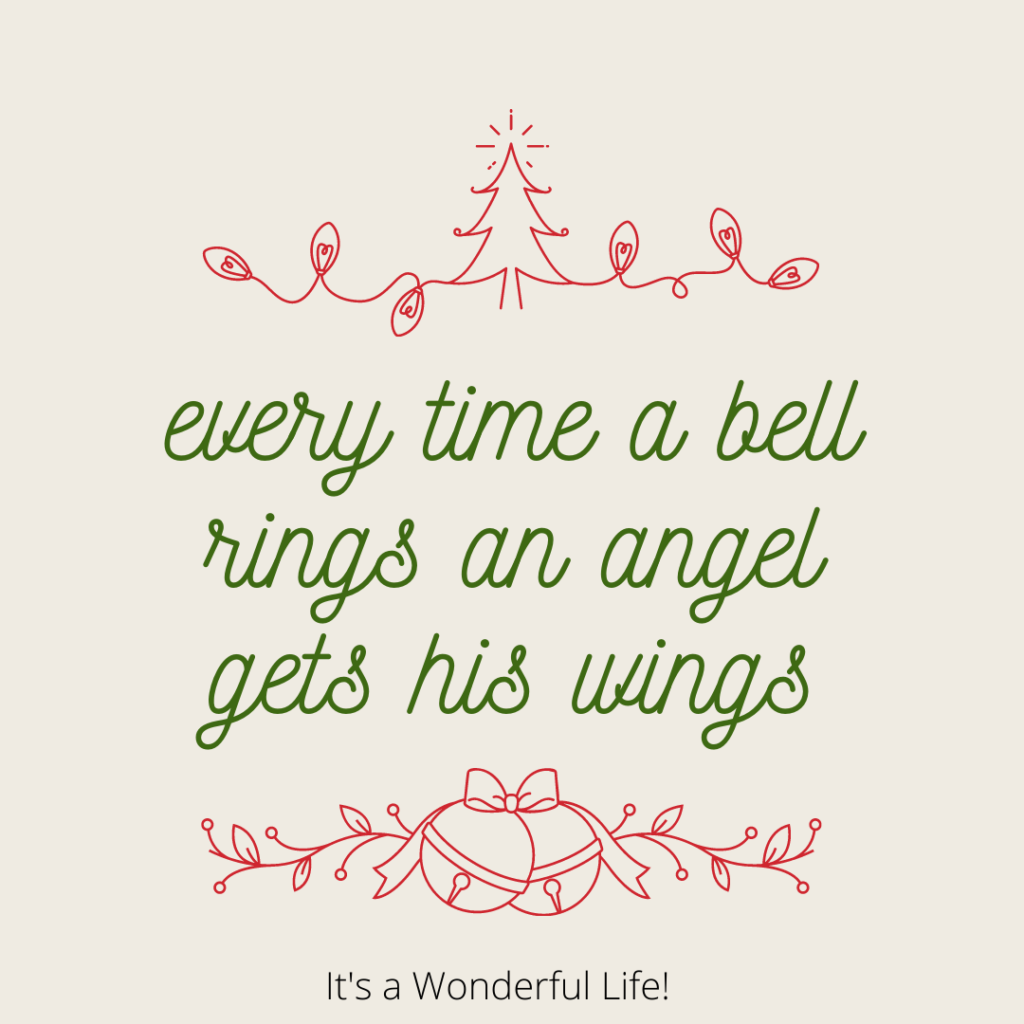
Every year I normally go to the Queen’s Film Theatre (might have to watch it at home this year) to see It’s a Wonderful Life.
If you haven’t watched It’s A Wonderful Life, we’ll try not to spoil it for you but it is a story of hope, redemption and kindness, which teaches us that having someone there for you, when you need it the most, is one of the greatest gifts you can receive.
Although the film premiered in 1946 and initially wasn’t considered a Christmas film – director Frank Capra told The Wall Street Journal, ‘I didn’t even think of it as a Christmas story when I first ran across it. I just liked the idea’ – it has become a staple of Christmas television in the 72 years since.
The film also focuses on the lead character’s struggle with mental health and suicidal thoughts. It’s A Wonderful Life doesn’t shy away from the truth that while Christmas is the most magical time of the year for some, for others it can be daunting, scary and miserable.
But the thoroughly festive and happy ending is guaranteed to bring a tear to your eye!
If you’ve been affected by any of these issues, and want to speak to someone in confidence, please don’t suffer alone. Call Samaritans for free on their anonymous 24-hour phone line on 116 123.
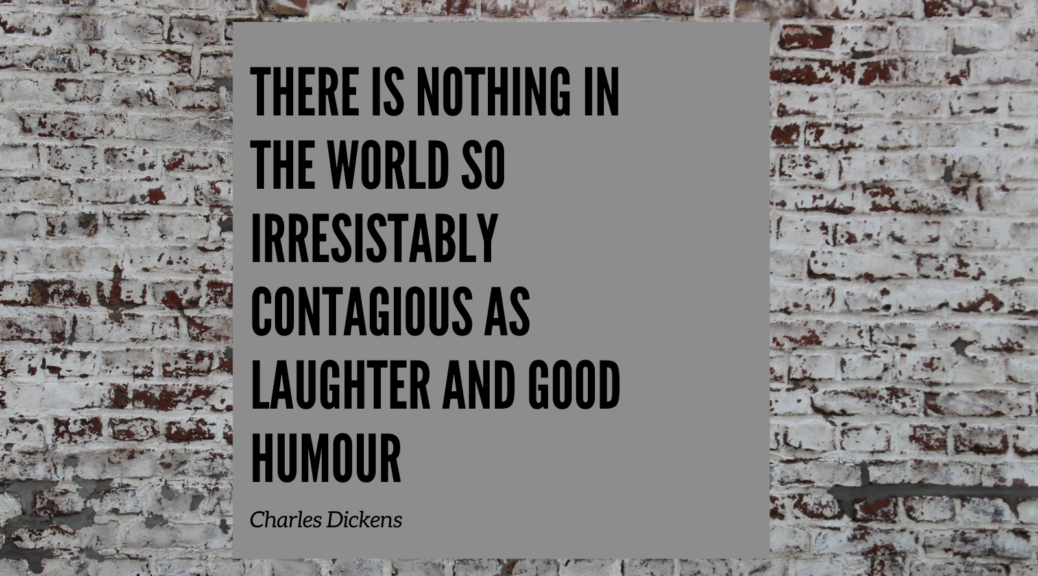
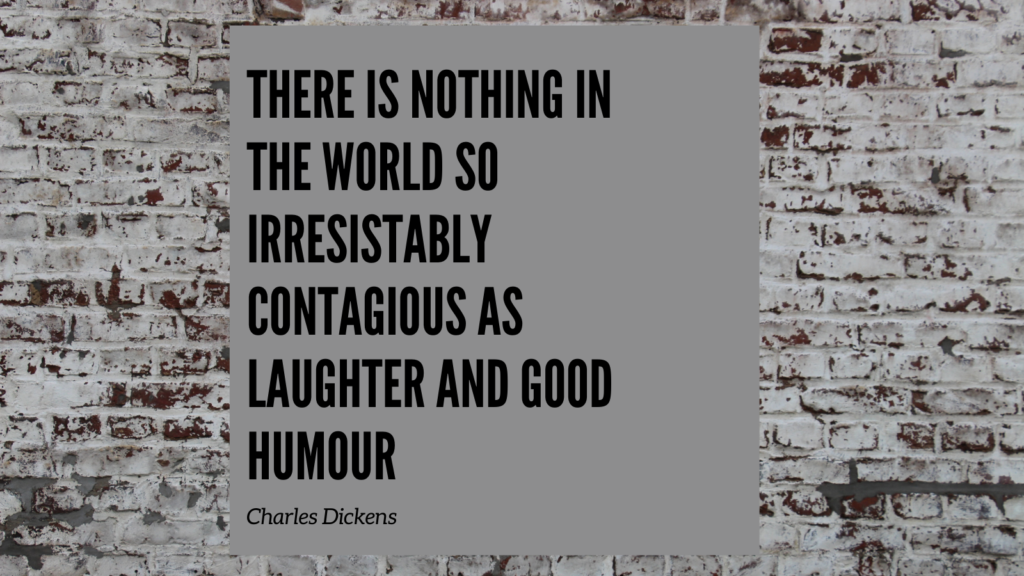
Catherine from our Belfast service reminds us of what Charles Dickens had to say
With that in mind she recommends that you spread some laughter this Christmas by sharing films like The Muppet’s Christmas Carol with family and friends.
A retelling of the classic Dickens tale of Ebenezer Scrooge, miser extraordinaire. He is held accountable for his dastardly ways during night-time visitations by the Ghosts of Christmas Past, Present, and future. Michael Caine plays the old miser Scrooge with Kermit as his long-suffering but ever-hopeful employee Bob Cratchit, and Miss Piggy as Cratchit’s wife. Definitely a movie which deserves a place among the family classics of the festive season!
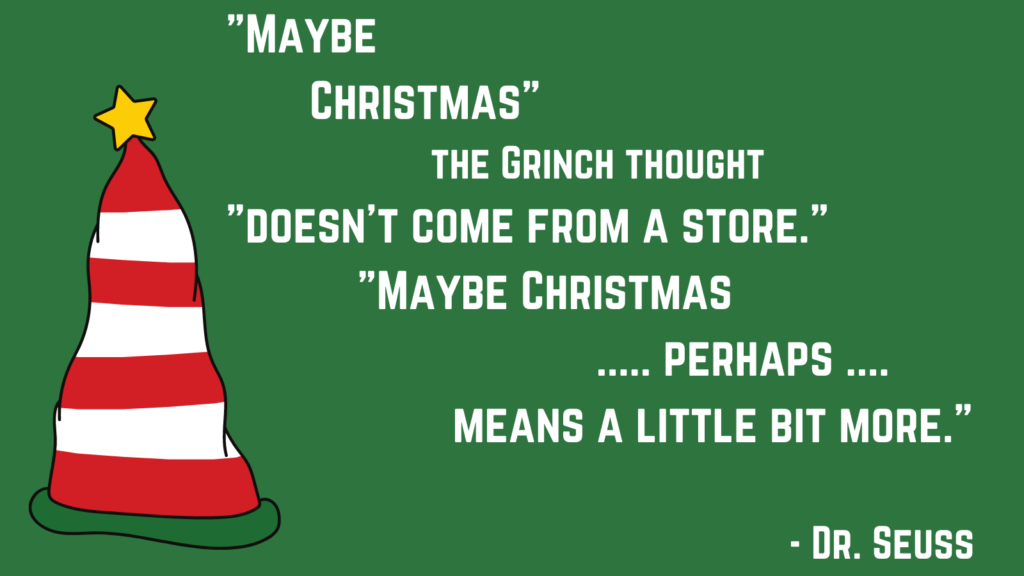
Catherine also recommends “How the Grinch Stole Christmas”.
“The Grinch reminds us of the importance of taking notice of who and what we are thankful for at Christmas”.
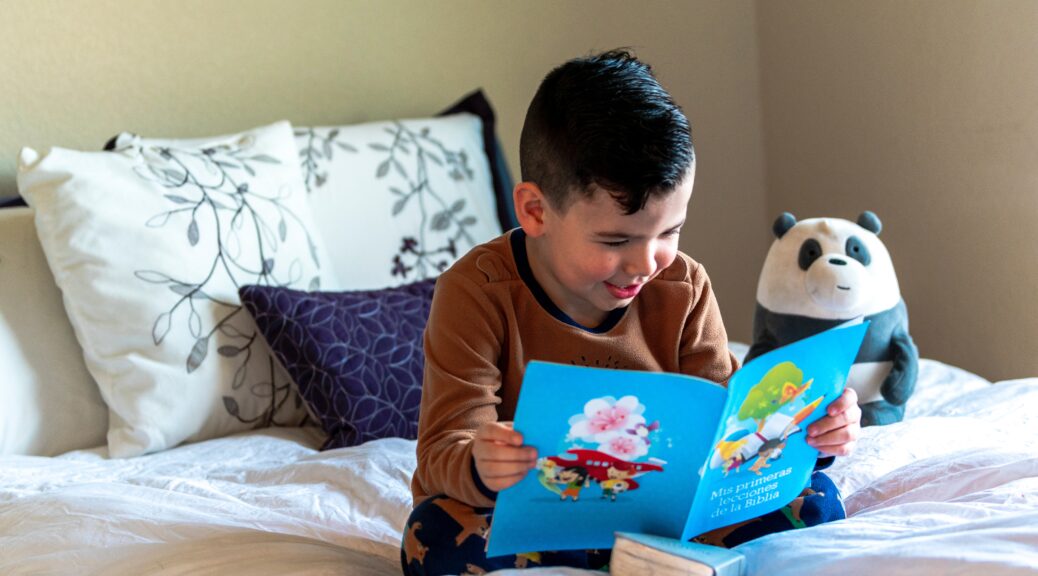
Danielle Davy, one of our counsellors from AMH New Colin Counselling, has a great idea! This year Danielle will be buying a book for a friend and delivering it early on Christmas Eve. In return she will also receive a book to read that day.
Christmas Eve can be quite a stressful day for many – prepping the turkey, buying last minute presents, running around visiting relatives – but as we know this year will be different. Many of us will be having smaller gatherings, so with not as many spuds to peel and visting being limited, perhaps this is the year to have a calmer Christmas Eve, where you can relax by the fire, and read a book by the light of the Christmas Tree! Danielle will be hoping to surprise her friend this year with a book she has never read and is looking forward to seeing what she will be receiving! Let us know what books you will be gifting this year and which ones you are hoping will be in your stocking!!
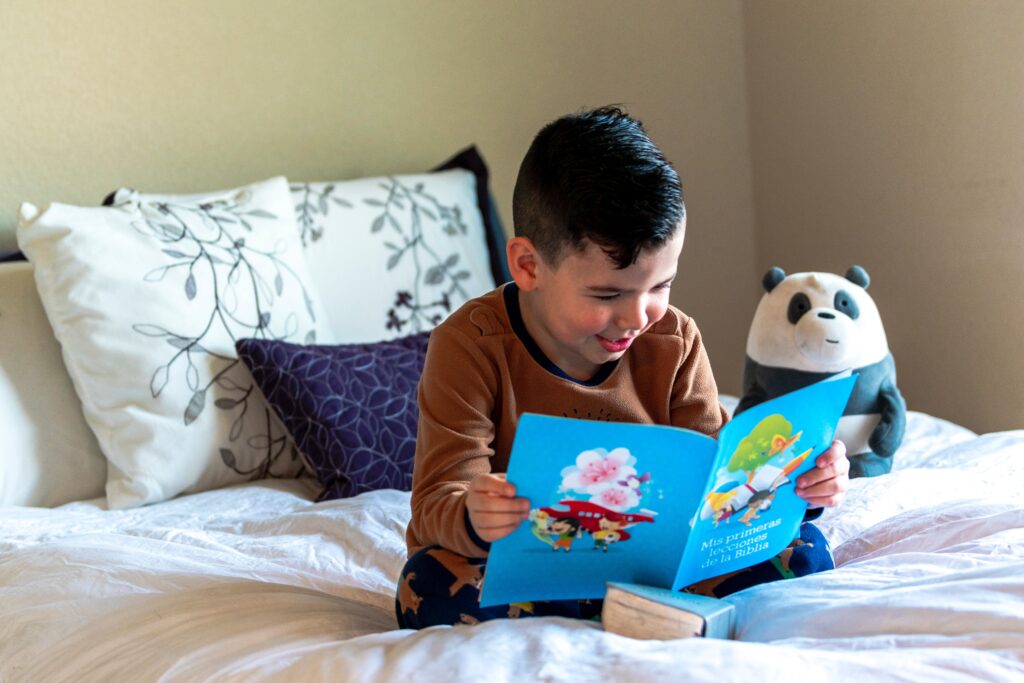
Reading has been found to be hugely beneficial for our mental health.
Reading a book can be one of life’s biggest joys, and can also be a way of coping with the difficult times in life, like loneliness or bereavement or indeed life in lockdown.
According to research from Oxford University Press, reading “challenging language” sends “rocket boosters” to our brains, which in turn boosts our mental health. “Books can take you to a different place. They can relax you and calm you, and they can offer wisdom, or humour, or both.”
Sydney Timmins is a writer and founder of the Mental Health Book Club Podcast. Here are her top eight mental health benefits of reading:
1. Reading is pleasurable
When you start to read a really good book it is often hard to put it down, the story captivates you and time disappears as you become absorbed. When you reach the end, you feel sad because it is over, or you are so eager to get the next book in the series you are emailing the author daily! It is a magical feeling and choosing to read a book can provide a number of other benefits.
2. Reading can reduce stress
Losing yourself in a good book has been shown to reduce your levels of stress. Research by Dr David Lewis showed that reading as little as six minutes a day can reduce stress levels by 60% by reducing your heart rate, easing muscle tension and altering your state of mind. That same study showed that reading was better at reducing stress than music, drinking a cup of tea, going for a walk and playing video games.
3. Reading can provide an escape from the ‘real world’
Closely linked to reducing stress levels when you read is the ability to escape from the real world. I did this a lot as a child as a coping mechanism to dealing with the emotional hurt I experienced from my family. I often become immersed in that world and helped me to forget my worries.
4. Reading helps you develop empathy for others
People who read fiction have been shown to improve their level of empathy, the ability to understand someone else’s belief’s, feelings and thoughts.
5. Reading works your brain and prevents memory loss
Participating in cognitive activities, such as reading over your life time (both early and later in life) was shown to slow down memory loss when compared to those who didn’t participate in mentally stimulating activities. The same study also found that the rate of mental decline was reduced by 32% when people participated in reading, writing and other activities later on in life. While those with infrequent stimulating activity found that their decline was 48% faster than those with average activity.
6. Reading groups help to treat mental health issues
My default for when I’m feeling low is to read but there is actually scientific research that shows that reading and then talking about what you have read could be beneficial to mental health and well-being. There is something called bibliotherapy and it has a profound effect on people suffering with depression.
7. Reading helps teenagers develop insights into being an adult
Becoming an adult can be tricky – a lot of things change during this time and exploring self-identity is crucial. Research has shown that reading for pleasure in teenagers has three key benefits, reading was shown to enhance academic performance, social engagement and personal development. Fiction helped teens by providing significant insights into mature relationships, personal values and cultural identity all of which are important in the transition from being a child to becoming an adult.
8. Reading can make you smarter
I often feel smarter after reading books, I learn new things, experience different cultures, understand myself better and research has shown that reading does in fact make us smarter. Cognitive differences have been seen between those who read a lot and those who read a little. People who are exposed to more written information are associated with higher vocabulary, general knowledge, and verbal skills.
You can follow Sydney Timmins on Twitter, and listen to the Mental Health Book Club podcast on their website.
Alicia Clarke is excited. A new permanent job awaits her. Alicia, like most people, enjoys working. It gives her a sense of purpose and achievement, it allows her to be financially independent. She thrives on both the creative and the social side of her job. Working is an important part of her life and who she is.
But Alicia has also lived with anxiety and low mood. The devastating impact of this on her life, led Alicia to realise that she needed to take some time out from employment to focus on her mental health. After making the huge decision last year to leave her job, Alicia sought support from Action Mental Health at their ESF funded ‘Working it Out’ project, based at AMH New Horizons in Belfast.
Speaking about her experience Alicia said: “I joined Action Mental Health during lockdown and took part in their online programmes. It was great, I joined their virtual choir, took part in history classes, cooking classes and even worked towards qualifications in Equality & Diversity and Motivation & Resilience, plus loads of other courses.
“These have provided me with new skills and tools to deal with my anxiety and helped to rebuild my confidence. The project provided structure to my day, gave me purpose and the opportunity to learn new skills while polishing up old ones – I really enjoyed all of it – it helped me find my feet again.
“I left the project to start working again and have just finished a temporary role. Due to Covid, I had to work from home for this job which helped ease me back into employment. My job interviews have also been virtual which reduced my nervousness as I was able to remain in the comfort of my own home.
“I’m very grateful to Action Mental Health for the support they offered during lockdown. I have learnt so much this time, I know I now have the skills to stop my anxiety becoming overwhelming in the future. How do I feel right now? I am excited for the future.”
Karen Quee, Service Manager, AMH New Horizons Belfast, said: “We are delighted that Alicia has gained so much from the ‘Working it Out’ project. Statistics show that one in five adults in Northern Ireland will show signs of mental ill health and Alicia is a very good example of how with the right support and focus it is possible to rebuild and move on to bigger and better things. We would encourage everyone to seek support if they are struggling with their mental health, together we can work towards a new tomorrow.”
The Action Mental Health ‘Working it Out’ project is part-funded through the NI European Social Fund Programme 2014-20 and the Department for the Economy.
This case study is part of the ‘Making it Work’ project – a partnership project with the Equality Commission for Northern Ireland and the Northern Ireland Union of Supported Employment which aims to highlight the employment support services available to disabled people in Northern Ireland.
More and more of us appreciate that the arts can play a valuable role in helping people who have mental health problems, in Action Mental Health we offer our clients opportunities to engage creatively in a whole host of workshops and qualifications. Even during lockdown, we have had virtual choirs and art classes via zoom!
Singing, dancing, painting, or writing can help to boost confidence and make us feel more engaged and resilient. Besides these benefits, art engagement also alleviates anxiety, depression and stress.
Several studies support poetry therapy as one approach to the treatment of depression, as it has been repeatedly shown to relieve depressive symptoms, improve self-esteem and self-understanding, and encourage the expression of feelings.
In Action Mental Health we have some very talented poets who all agree that writing poetry helps them to get to the heart of their thoughts or feelings that they don’t quite understand, or those that they want others to better understand.
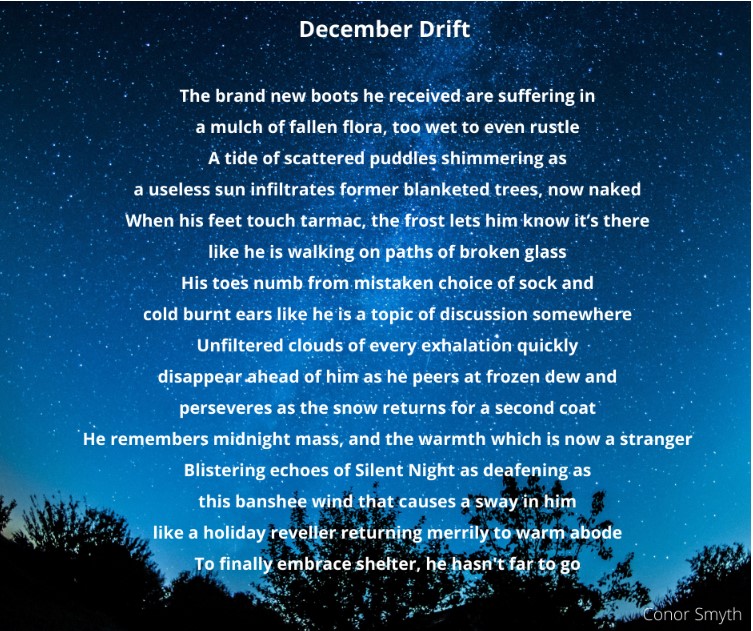
Conor Smyth from Action Mental Health’s Fundraising team penned this poem last year, thanks for sharing 🙂
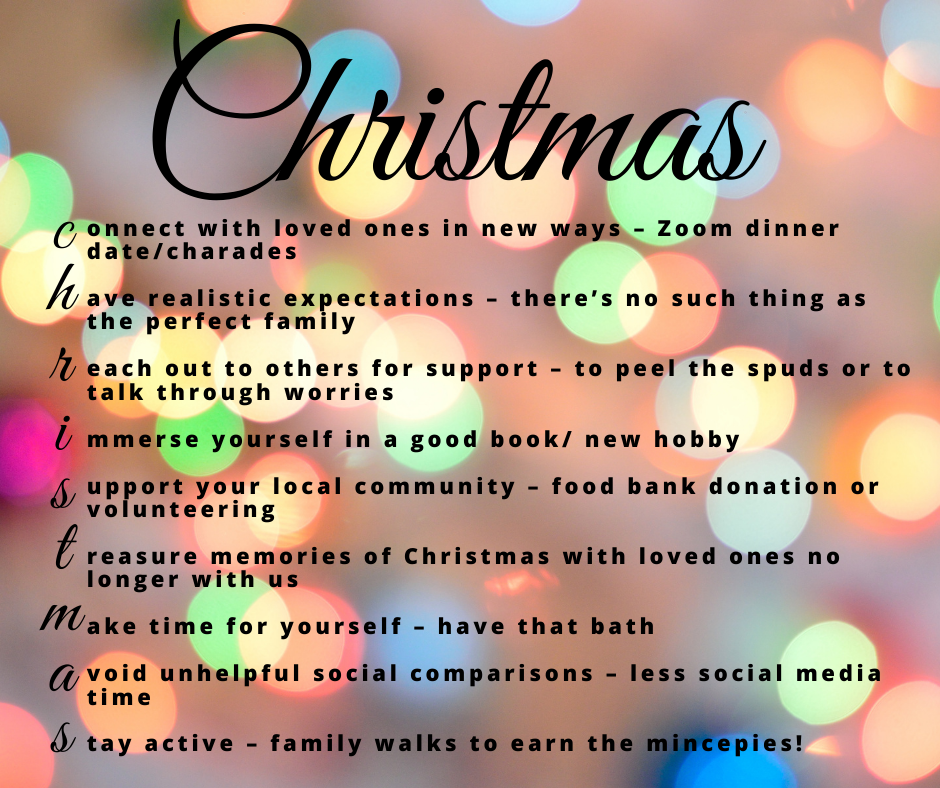
Catherine Cunningham based in our Belfast service, wrote this very clever acrostic poem to help you remember how you can look after you mental well-being this Christmas.
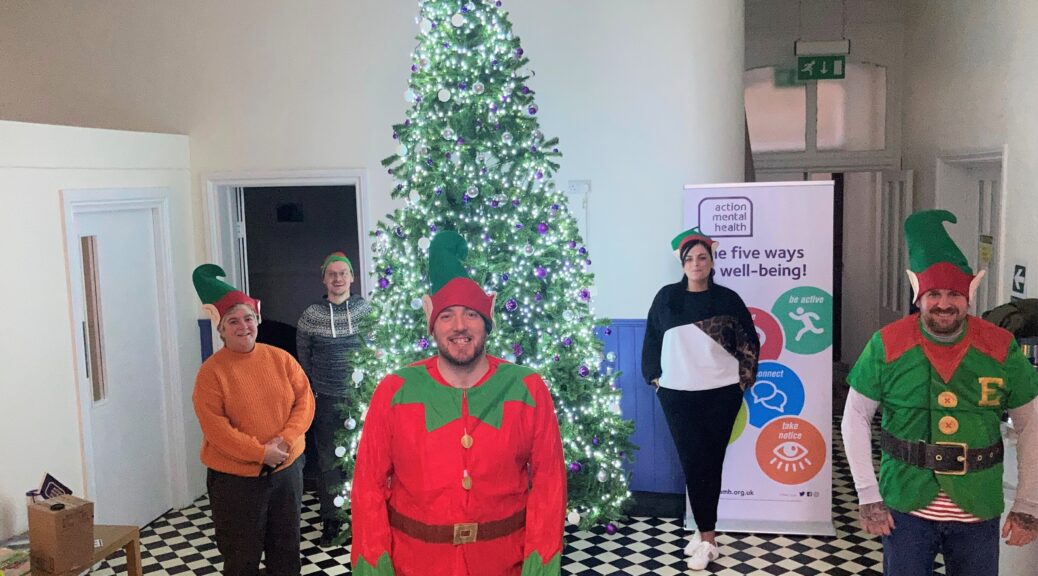
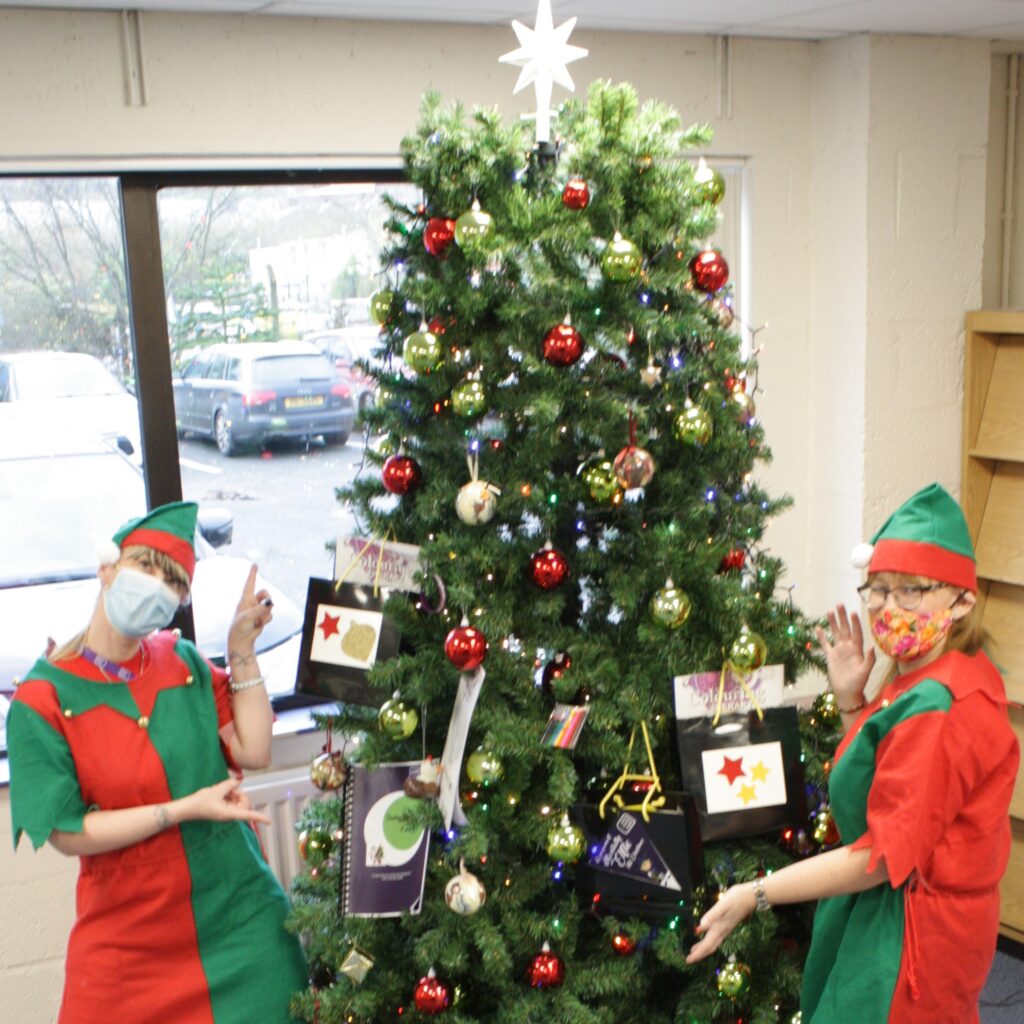
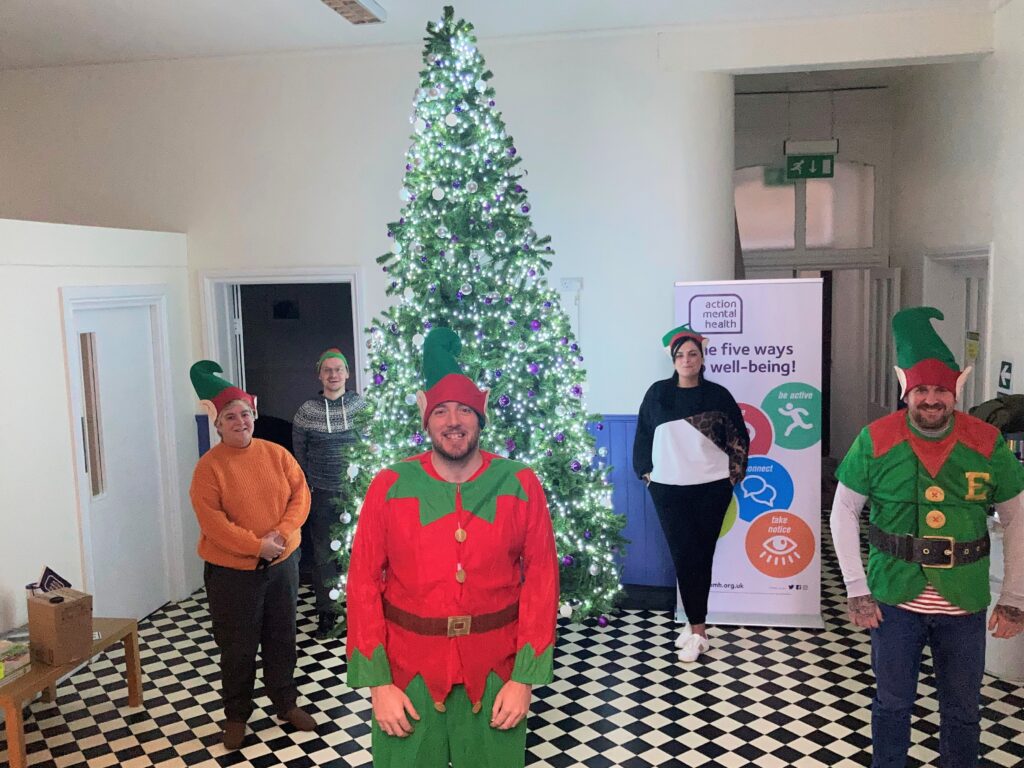
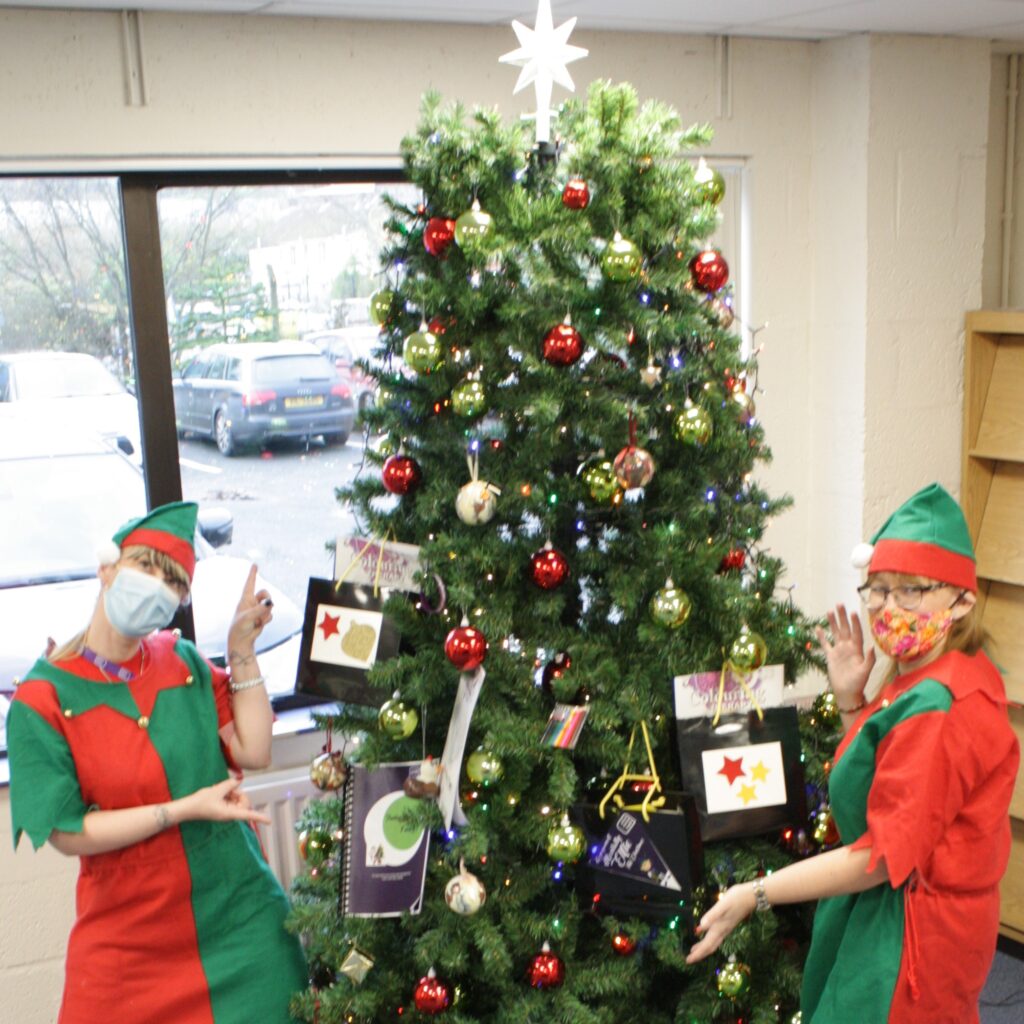
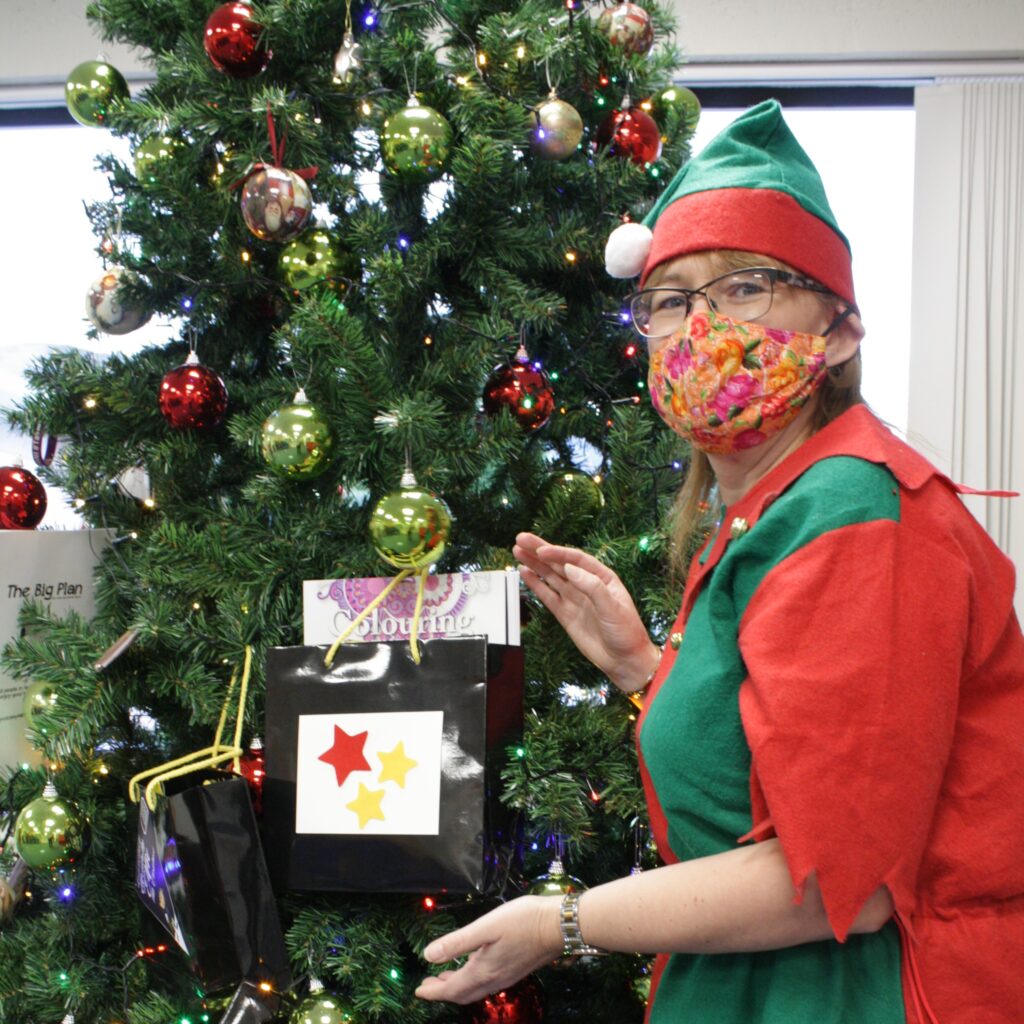
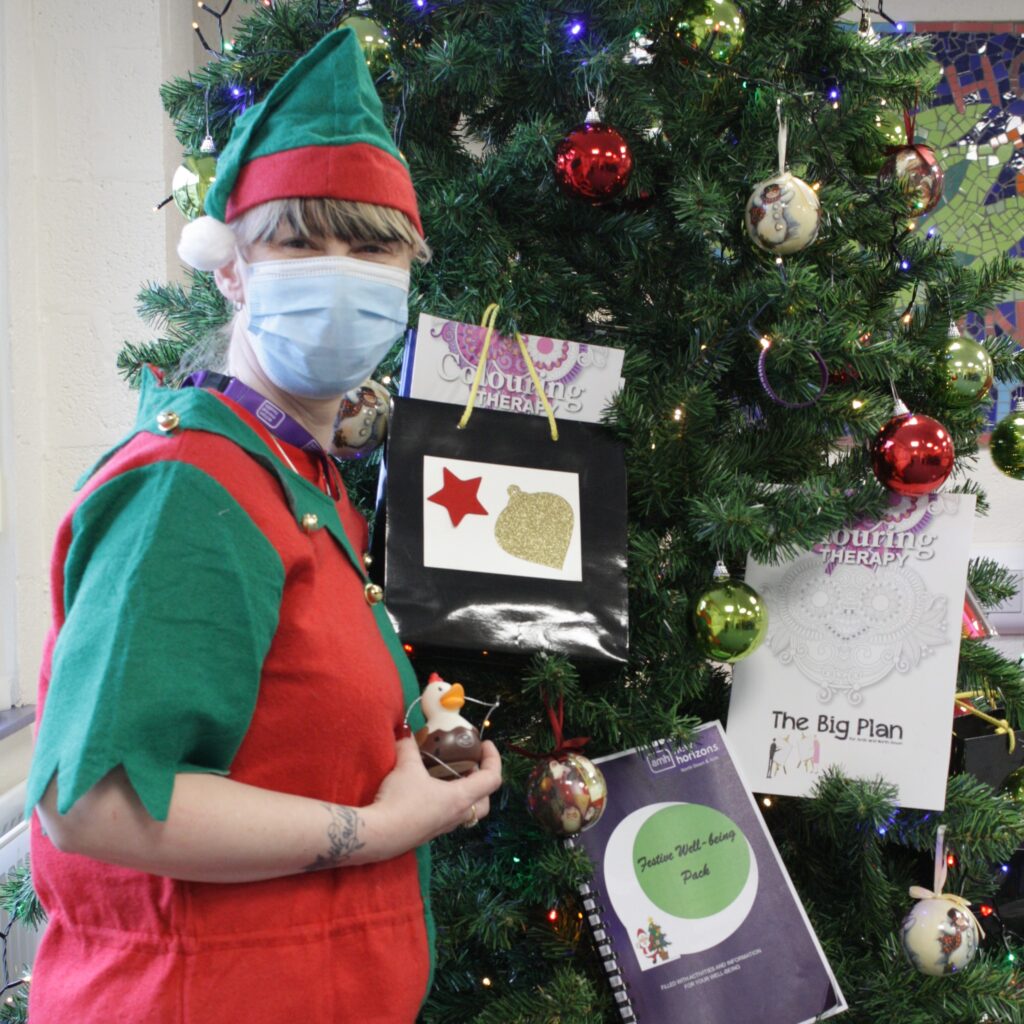
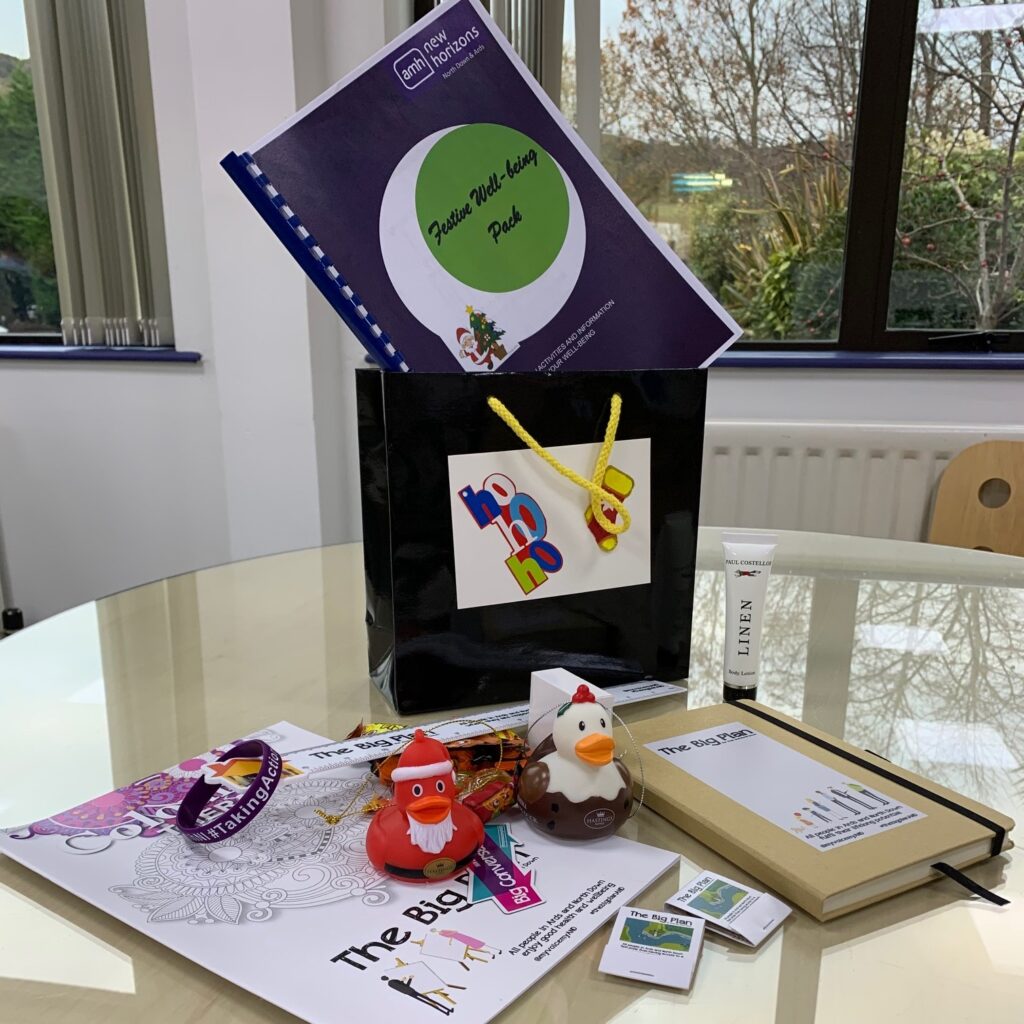
Some cheeky little elves have been busy at AMH New Horizons North Down & Ards creating FESTIVE CHEER packs for all our clients based in the Newtownards. These include an activity pack covering every day in December and colouring therapy & festive puzzle books. Our thanks also to the Hastings Hotel Group for donating Jemima Pudding Duck, the Christmas edition of their famous duck family, to each and everyone! We hope everyone enjoys getting creative over the festive season!
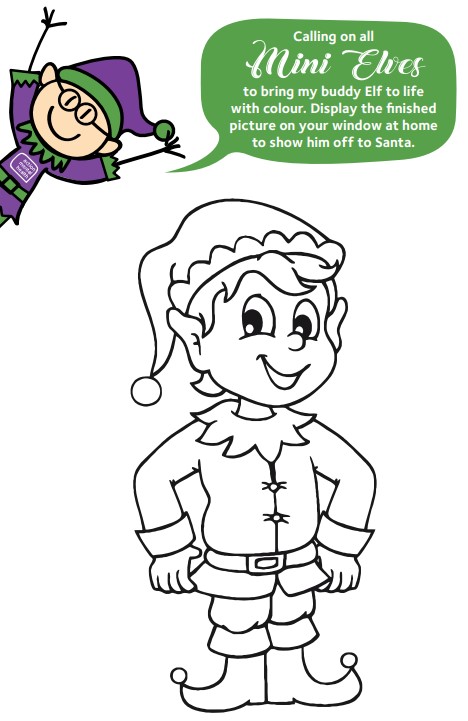
You can also download Elfie’s friend to colour and stick in your window for Santa and Rudolph to see!